
Join The Weekly Power Up Newsletter
Weekly AI and automation insights for small businesses ready to scale.
Run This Playbook Before Automating Anything
When I start working with a new client, I'm never walking in with a preset, one-size-fits-all solution. I'm showing up the way a doctor does before making a diagnosis; asking questions, listening carefully, and trying to piece together the most accurate picture I can before recommending anything.
How Much Is Manual Work Costing You?
The most straightforward way to calculate automation ROI is also the most obvious: how long does this process take manually, and how often does it happen?
For example: if a process takes 30 minutes every time a new client is onboarded, and you onboard 10 clients a month, that's 5 hours of manual work per month. Automate it, and you get those 5 hours back every month.
Not Everything Needs AI. Here's How to Tell.
Every week I talk to small business owners who want to implement AI. And the first question I always ask is the same:
Why?
Not to be difficult, and not to make them feel stupid, but because "implement AI" isn't actually a goal. It's a solution in search of a problem.

The Five W's of Your Business Processes
Ah, the Five W's. A foundational framework that's been taught in journalism for over 100 years, and one I haven't stopped using, even though I haven't worked in journalism for years. Turns out it's just as useful for documenting business processes as it is for writing a news article.
The Tool Is Replaceable. The Process Isn't.
Last week I shared my thoughts on the Airtable acquisition. This week, a natural conversation has emerged that's less about Airtable specifically and more about something bigger: what happens when a tool you've built your business around changes in ways you didn't choose?
More Doesn't Always Mean Better
The trap I fell into was thinking, "This level of effort got me here, so to get to the next level, I just need to do more." Work harder, take on more, say yes to everything; just ... more.
That logic, as it turns out, is completely backwards, and it took a mentor asking me a simple question to see it.

The Question That Changed How I Work
"If you say yes to everything, what are you saying no to?"
A mentor said that to me almost 10 years ago. I still ask myself that question on a daily basis.
The Gap Between "Deal Closed" and "Project Started"
Closing a deal feels great. Someone said yes, the agreement is signed, and the money is coming. A lead just became a client, and that's always a win worth celebrating.
And then, if you're not careful, things get messy. Not dramatically and all at once, of course. It's more subtle than that.
The deal closed, but the handoff didn't happen.
Stop Paying for Tools Nobody Uses
There are a lot of great tools out there. And especially for small teams moving fast, it's easy to say yes to something new. Twenty bucks a month? Let's try it! Forty bucks a month? Seems worth it! Sometimes those tools are great. Sometimes they catch on and become indispensable.
But sometimes they just quietly keep charging you while nobody's actually using them anymore.
How I Reduced My Email Workload by 90%
Somewhere along the way, as email volume grew and work became increasingly online, the inbox became a to-do list. An email comes in, gets a quick scan to make sure it isn't urgent, and then gets marked unread as a little flag to come back to later. Hours pass, sometimes days, and the flag gets buried. The mental note fades. And in the background, there's this anxiety of wondering: did I actually follow up on that?

Stop Using Your Inbox as a To-Do List
If something comes into your inbox that needs action, it deserves a real home somewhere that's purpose-built for it.
Your inbox should be where communication lives. Not where your to-do list hides.
Why Great Systems Fail
Here's something that might sound counterintuitive: the sign of a truly great system is that you don't notice it.
Think about an offensive line in football. When they're doing their job well, nobody's talking about them. The offense moves. The quarterback has time. Things just flow. It's only when they're giving up sacks or committing penalties that they become the story. The best ones are practically invisible.
What Makes a Great System
A great system doesn't have to be complex. It just has to be repeatable, frictionless, and actually used by the people it's built for. It has to work.
Why "Later" Is the Wrong Answer for Messy Data
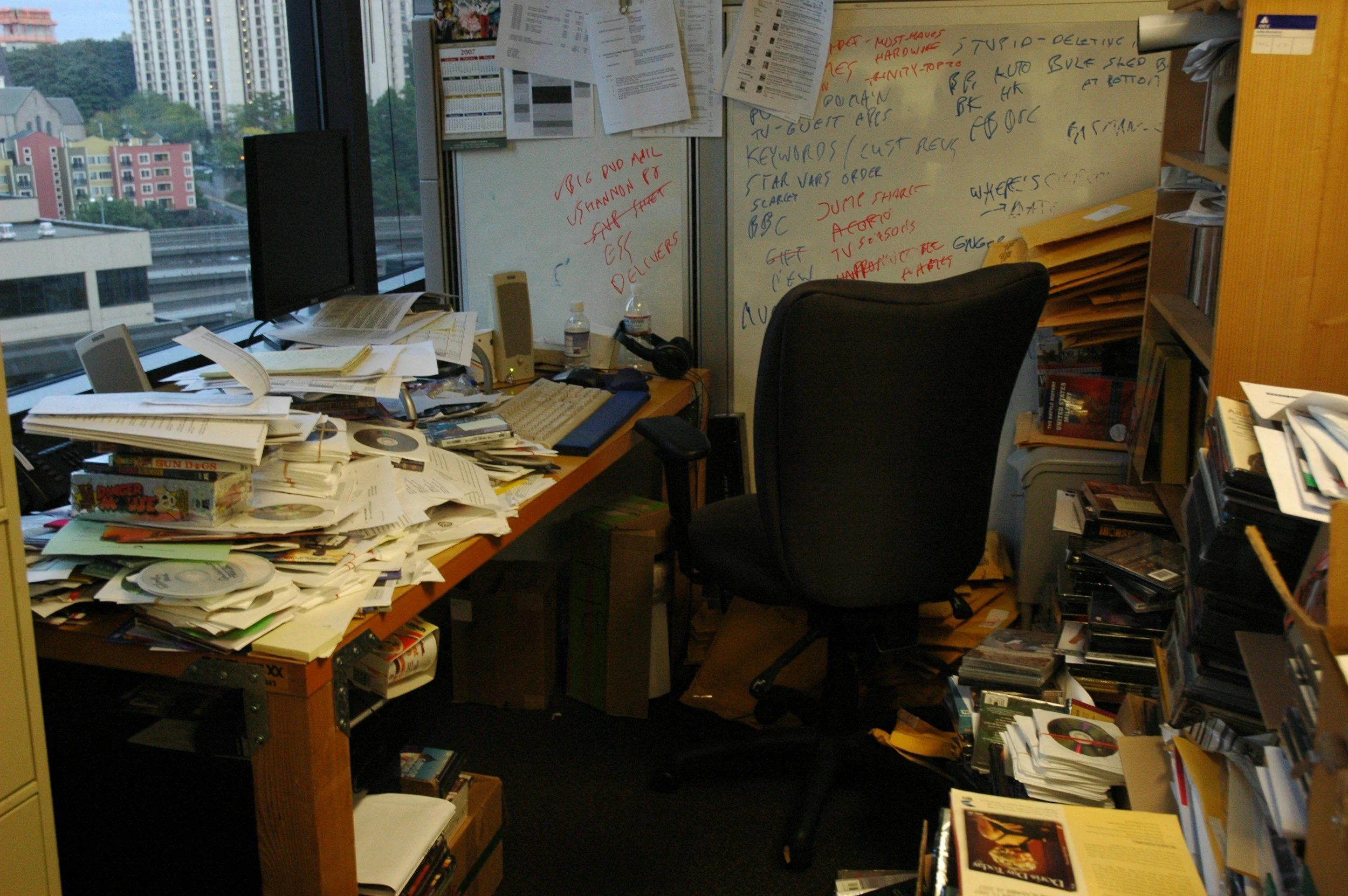
Every new record added to a disorganized system makes the cleanup harder. Every automation built on top of inconsistent data adds another layer to untangle later. Every decision made from an untrustworthy report costs you something, even if you can't see it yet.
Your Data Is the Foundation. Don't Skip It.
If you're building automations, dashboards, or AI tools on top of messy, inconsistent data, you're not building on solid ground. You're building on something that's going to crack eventually. Maybe not today, but eventually. And most damaging of all: you risk making decisions for your business based on incorrect signals.
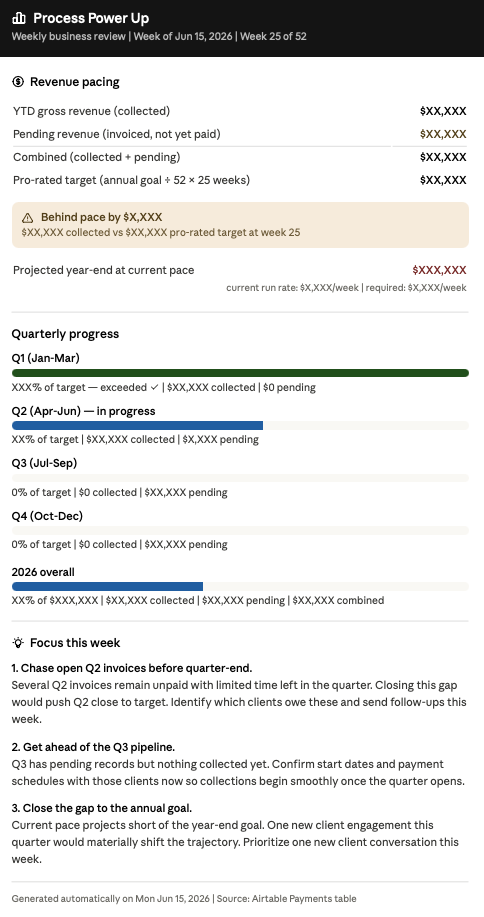
How I Start Every Monday Morning
I start every Monday morning off the same way: I make my coffee and I review my company's weekly financial report. I spend zero time compiling the report; I only review it.
What Not Automating Is Actually Costing You
What would you do with an extra hour a week?
You might be thinking, "It's only an hour." True, but that's four hours a month, 12 hours a quarter, 52 hours a year (you get the point). It’s time you could spend landing new clients, building new products and services, or pursuing a new idea. Or time you could be spending with family and friends. Or reading. Or sleeping.
I’m not here to tell you what you should spend that extra time doing; I’m just here to tell you that if you’re a small business owner, that hour exists. It's just buried under busy work, and automation is your tool to help excavate it.